
Notice of Proposed Rulemaking: Federal Contractors Required to Provide Paid Sick Leave
Last month, the DOL published proposed rules establishing paid sick leave for federal contractors in accordance with Executive Order 13706 signed by President Obama. The deadline for comments on the proposed rules has been extended to April 12, 2016. A renewal of the Healthy Families Act objectives, the goal is to provide employees working on federal contracts with at least 7 days of paid leave for illness or family care.
Scope. The proposed rules would apply to employees who work on or in connection with new federal contracts awarded on or after Jan. 1, 2017 covered by the Service Contract Act or the Davis-Bacon Act, concessions contracts and service contracts in connection with federal property or lands. In short, contract coverage would be the same as Executive Order 13658, Establishing a Minimum Wage for Contractors, provided the employee spends at least 20% of their working hours in a particular workweek performing work in connection with a covered contract.
Absences Covered. There are a broad set of limitations in which paid sick leave may be used by an employee resulting in absence. Further, the use of paid sick leave cannot be contingent on the employee seeking paid sick leave to find a replacement. Absences that will result in paid sick leave will include:
* Physical or mental illness, injury, or medical condition;
* Obtaining diagnosis, care, or preventative care from a health care provider;
* Caring for a child, parent, spouse, a domestic partner, or any other individual related by blood or affinity whose close association with the employee is the equivalent of a family relationship, who has any of the conditions or needs for diagnosis, care, or preventative care described above, or is otherwise in need of care.
The regulations also expand paid sick leave for an illness, injury or condition of the employee, or for the employee to obtain care for an illness, injury or condition, where the condition or care results from domestic violence, sexual assault, or stalking; for those seeking assistance from a victim services organization or to prepare or commence legal action as a consequence of domestic violence, sexual assault, or stalking; or to assist an individual related to the employee who is a family member who undertakes any of these actions as a result of domestic violence, sexual assault or stalking.
Requirements for requesting leave. Under the proposed regulations, paid sick leave shall be provided upon the oral or written request of an employee that includes the expected duration of the leave, and is made at least seven (7) calendar days in advance where the need for the leave is foreseeable, and in other cases as soon as is practicable.
Employer Responsibilities. The proposed rule provides two options for accruing paid sick leave, an accrual method and a “lump-sum” method. Under the accrual method, the employee will accrue not less than one hour of paid sick leave for every 30 hours worked on all covered contracts plus nonworking time on which the employee is paid. For full-time exempt employees, accruals can be calculated on actual hours worked (if tracked) or on an assumed 40 hours worked each workweek. Under the “lump sum” method, an employee must be provided with at least 56 hours of paid sick leave at the beginning of each accrual year. Paid sick leave will carry over from one accrual year to the next and carried over sick leave will not count toward any limit the contractor sets on annual accrual. However, an employer can place a limit on the amount of paid sick time an employee can accrue, provided that the cap is not less than 56 hours of paid sick leave per accrual year. The proposed rule allows the employer to select the 12-month period to use as the accrual year.
Further, the proposed rule requires federal contractor employers to inform their employees of their accrued sick leave balances no less than monthly.
Enforcement. No private right of action is created under the proposed regulations. Complaints for noncompliance must go through the DOL’s administrative process. Penalties can include backpay and reinstatement of last wages and benefits, liquidated damages in an amount equal to all other monetary relief ordered, and debarment.
While many employers already provide paid sick leave benefits, those who are federal contractors are encouraged to review their policies in light of the proposed regulations and either amend their existing policy or be prepared to adopt a new paid sick leave policy. For further information, please contact Mansour Gavin’s Labor and Employment Practice Group.
LEGAL DISCLAIMER
The information contained on this web site and any linked resource is intended to provide general information and does not constitute legal advice. The content is not guaranteed to be correct, complete, or up-to-date. This web site is not intended to create an attorney-client relationship between you and Mansour Gavin LPA or any of its associates, and you should not act or rely on any information in this web site without seeking the advice of an attorney.
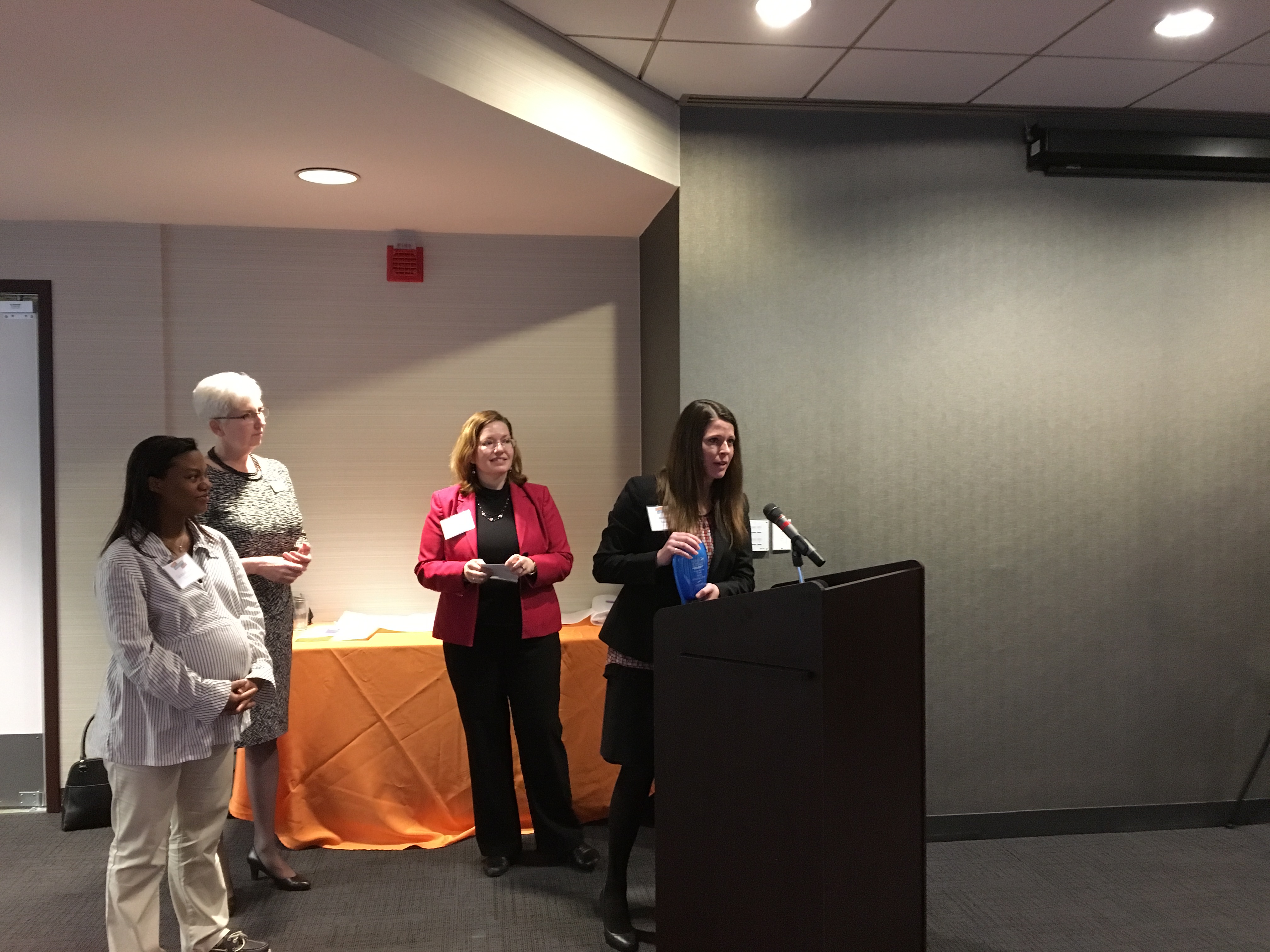
Mansour Gavin would like to congratulate Swagelok Company employment and compliance counsel, Adrienne Stemen, for being a selected honoree at yesterday evening’s Women Honoring Women reception! The event was put on by the Women in Law section of the Cleveland Metropolitan Bar Association, and Adrienne was recognized in the In-House category for both her professional and community activities. We’ve had the pleasure of working with Adrienne for the last couple of years as outside counsel for Swagelok, and can say first-hand that the award was well-deserved. Other award recipients included Ann M. Porath, The Legal Aid Society of Cleveland, in the Public Sector category; Kerin Lyn Kaminski, Giffen & Kaminski, LLC, in the Law Firm category; Kristen Cavin, Forest City Enterprises, Inc., in the Rising Star category; and Maria L. Shinn, Shinn Lanter, LLP, in the Small Firm/Solo Practitioner category. We extend our congratulations, as well, to all of the talented female attorneys who were honored.
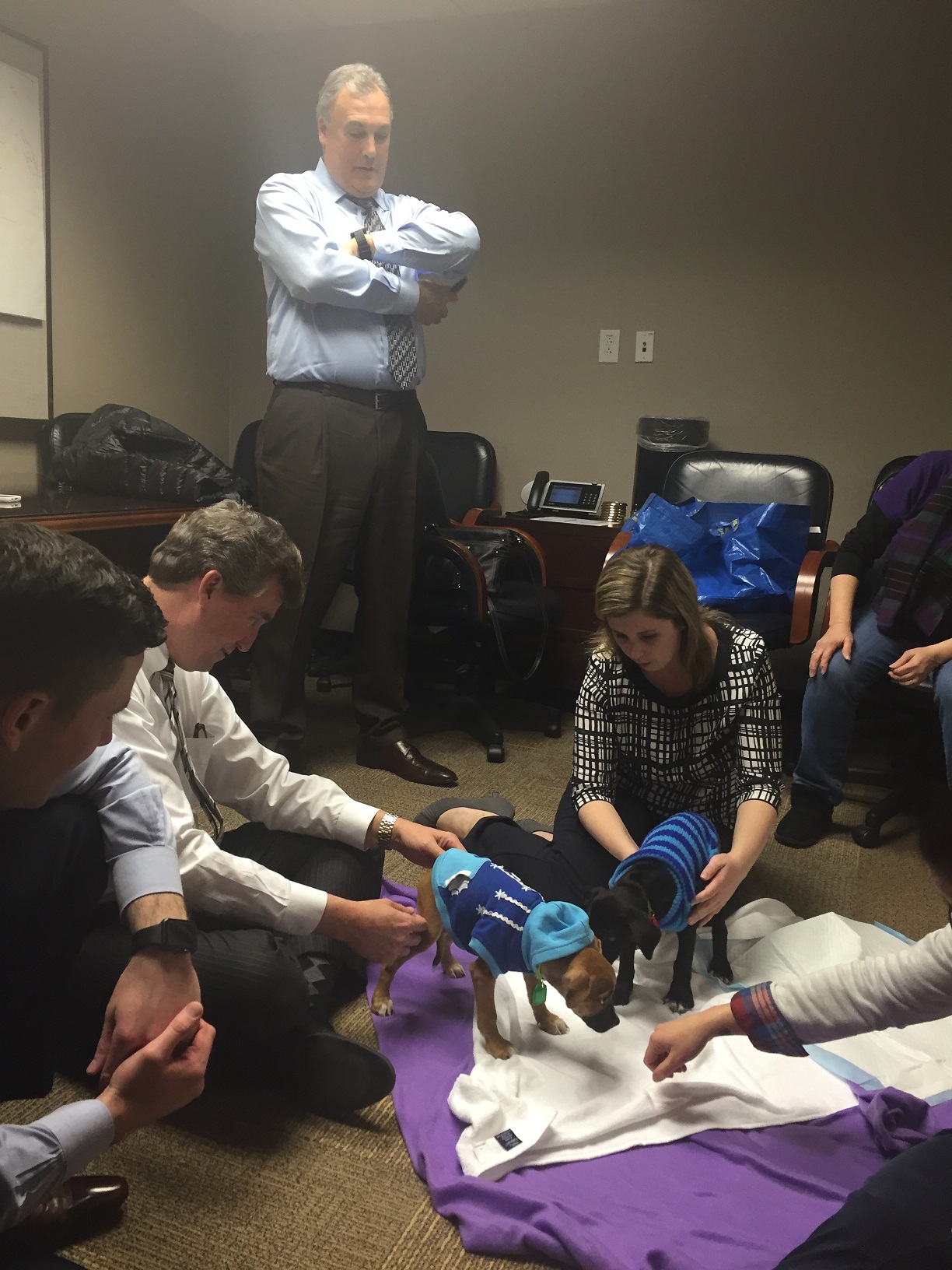
We took a short break from work and enjoyed some puppy snuggle time on Friday, February 12th! The fun came courtesy of a Valentine’s Day promotion that Uber and the Cleveland Animal Protective League put on from 11 a.m. to 3 p.m., which was geared toward raising awareness for pet adoption and shelter animals. Downtown Cleveland offices could request a 15-minute visit from the puppies. We wanted them longer!

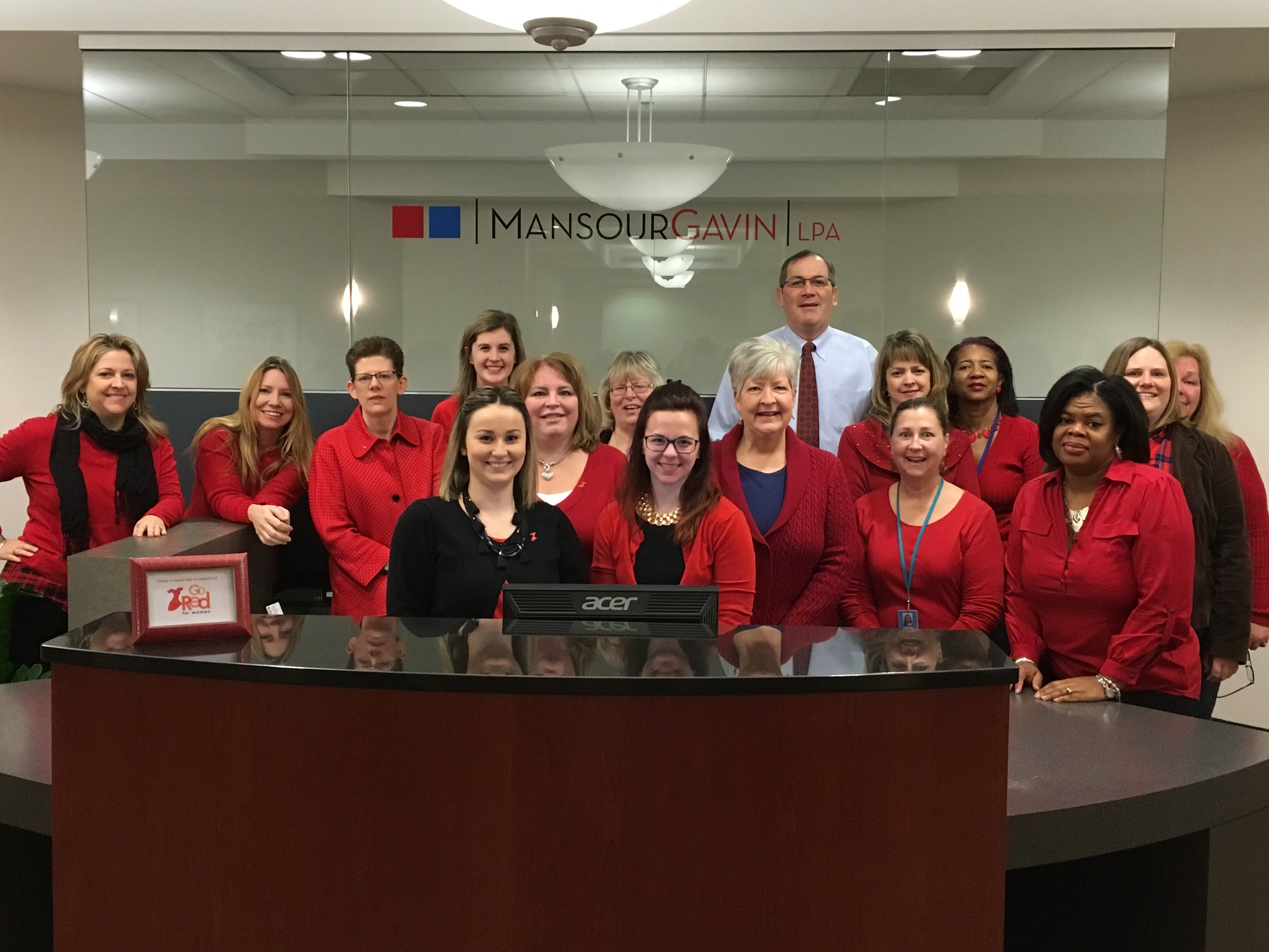
In support of Go Red for Women, Mansour Gavin participated in “National Wear Red Day” on Friday, February 5, 2016.
Following the recent lead of the National Labor Relations Board (“NLRB”), on January 20th, 2016 the U.S. Department of Labor (“DOL”) issued a new guidance document which signals a more aggressive approach to holding joint employers responsible for wage and hour violations, including unpaid overtime pay. Under the new guidance document, DOL’s Wage & Hour Division will attempt to hold those employers who “share” employees or use temporary or leasing agencies to staff positions liable for wage and hour violations committed by another employer. This guidance document follows on the heels of the NLRB’s decision in Browning-Ferris Industries of California, 362 NLRB No.186 (2015), which expanded the definition of joint employment for purposes of union recognition and possible violations under the National Labor Relations Act. We expect that other federal agencies, such as the Occupational Health and Safety Administration, will shortly follow the DOL’s lead.
Interestingly, the DOL describes two separate types of joint employment: horizontal joint employment and vertical joint employment. Horizontal joint employment, described in a graphic illustration, is defined as two employers who share the use of the same employees and are connected by way of common ownership or common management. For example, an employee working for Company A 40 hours per week and working 10 hours for Company B with common ownership or management would be entitled to overtime pay for the combined hours.
Vertical joint employment is the type discussed by the NLRB in Browning-Ferris and includes employers who control the terms and conditions of the temporary or leased worker’s job. The more control the employer has over the temporary or leased worker, the more likely the employer will be considered a joint employer.
Thus, companies that share common ownership or common management with other companies need to look carefully at whether or not employees from one company are working with the other company to make sure they are not in violation of the Fair Labor Standards Act. Additionally, employers who use temporary or leased employees need to also determine if they exercise sufficient control over the terms and conditions of the temporary or leased employees work to meet the definition of a joint employer under the DOL guidance.
Stay tuned for further developments in this rapidly expanding area of joint employment. For more information, please contact Mansour Gavin’s Labor and Employment Practice Group.
LEGAL DISCLAIMER
The information contained on this web site and any linked resource is intended to provide general information and does not constitute legal advice. The content is not guaranteed to be correct, complete, or up-to-date. This web site is not intended to create an attorney-client relationship between you and Mansour Gavin LPA or any of its associates, and you should not act or rely on any information in this web site without seeking the advice of an attorney.
On April 1, 2016, U.S. Citizenship and Immigration Services (U.S. CIS) will begin accepting H-1B petitions for covered employment starting October 1, 2016. There is a numerical limit on the number of new H-1Bs issued each federal government fiscal year and, as has occurred for many years, it is anticipated that the numerical limit will be reached quickly. To avoid rejection of a petition because the numerical limit is reached, employers need to begin preparations now for filing on April 1st.
The H-1B program is available to foreign nationals who will be employed in a “specialty occupation.” “Specialty occupation” means an occupation which requires the theoretical and practical application of a body of highly specialized knowledge to fully perform the occupation, and which requires the attainment of a bachelor’s degree or higher as a minimum requirement to perform the job duties. H-1B visas are valid in three-year increments for up to six years and are both employer and location specific. In addition, H-1B visas require that the foreign national be paid the prevailing wage for the job in the geographic area of intended employment or the actual wage paid to similar employees of the employer in the same occupation at the same work site, whichever is higher.
Petitioning employers must certify, under the penalty of perjury, that the Export Administration Regulations (EAR) and the International Traffic In Arms Regulations (ITAR) have been reviewed and a determination made regarding whether an export license is required before controlled technology or technical data may be released to the foreign national on whose behalf the H-1B petition is filed. The certification requires that the petitioning employer involve its trade professional early in the immigration process to ensure that the export control certification is accurately answered and if an export license is required, that it is received in time for the foreign national to begin employment in the position which is the subject of the H-1B petition.
Mansour Gavin has attorneys ready to assist you in filing your H-1B petition and navigating U.S. Export laws. If you have any questions or require assistance with your business immigration, please contact Ann E. Knuth in our Labor and Employment Group. If you have any questions or require assistance with international import and exporting activities, please contact Edward O. Patton in our Corporate and Business Services Group.
Legal Disclaimer
The information contained on this web site and any linked resource is intended to provide general information and does not constitute legal advice. The content is not guaranteed to be correct, complete, or up-to-date. This web site is not intended to create an attorney-client relationship between you and Mansour Gavin, LPA or any of its associates, and you should not act or rely on any information in this web site without seeking the advice of an attorney.
The Ninth District Court of Appeals recently reversed the City of Lorain Board of Zoning Appeals’ denial of area variances involving the application of riparian setbacks to a proposed residential subdivision. Significantly, the Appellate Court agreed with the Lorain County Common Pleas Court’s reversal where Appellant K. Hovnanian Oster Homes, represented by Bruce Rinker of Mansour Gavin, demonstrated that its development plan actually implemented the storm water management methodologies sought to be effectuated by the City’s Zoning Code.
Bruce successfully argued that the requested relaxation of the linear setback distance was to enable the developer to install detention and grading elements expressly designed to intercept and filter surface waters on site, thus reducing potentially erosive and adverse water quality impacts through the granting of the variances.
Both the Appellate and Common Pleas Courts emphasized that “the Board did not properly consider the mandatory factors enumerated in L.C.O. 1533.14 [Riparian Setback provision] prior to denying K. Hovnanian’s variance application.”
Given the adoption by the vast majority of Northeast Ohio municipalities of the model Storm Water Management Code, as did Lorain, the Courts’ analyses are practical guides for all developers to consider in advance of submitting a subdivision plan in which comparable storm water management requirements are to be met.
For more information, please contact Mansour Gavin’s Real Estate and Land Use Practice Group.
LEGAL DISCLAIMER
The information contained on this web site and any linked resource is intended to provide general information and does not constitute legal advice. The content is not guaranteed to be correct, complete, or up-to-date. This web site is not intended to create an attorney-client relationship between you and Mansour Gavin LPA or any of its associates, and you should not act or rely on any information in this web site without seeking the advice of an attorney.
As the saying goes, “Three strikes and you’re out” or “Good things come in threes.” In Mansour Gavin’s case, it certainly has been the latter. Recently, Mansour Gavin attorneys have secured trial victories in the following matters:
- David Hildebrandt and Ann Knuth successfully defended a northeast Ohio tech company against a claim of bankruptcy discrimination. The former executive plaintiff claimed that his employment was terminated solely on account of his having filed bankruptcy prior to his employment with Mansour Gavin’s client. The defense was able to show that there were several reasons for the termination decision, including undocumented performance issues. The jury returned a unanimous defense verdict in favor of Mansour Gavin’s client after less than one hour of deliberations.
- Tim Reid and Michael Quinlan recently obtained a defense verdict for a client on a claim of excessive force and assault and battery, where a defendant corrections officer’s restraint of a pretrial detainee resulted in a fractured hip which required hip replacement surgery. The claim arose in 2011 against a county detention facility. Although factual claims prevented summary judgment dismissal, at trial our attorneys were able to utilize modern document production and video to demonstrate weaknesses in the plaintiff’s claims, and were able to successfully bar plaintiff excessive force expert from testifying following a Daubert challenge. This was the fourth successful defense of this same client in the past year, as three other civil rights cases against the same county were dismissed on summary judgment. Mansour Gavin was also successful in receiving an award of attorney fees for the same defendant in a civil rights claim.
- Edward Patton, with assistance from Miles Welo, successfully defended a client against claims of civil recovery for a criminal act, RICO, civil conspiracy, fraud, conversion, and unjust enrichment. The claims arose in 2011 when a public school employee was accused of defrauding a local school district out of a large sum of money. From the onset of litigation, the facts showed that it was highly unlikely our client was involved with the supposed fraud. However, a complaint was still filed, and out of more than 25 named defendants, our attorneys successfully represented the only defendant to go to trial. Mansour Gavin presented a fact-based defense that established the local school district proceeded to trial without sufficient evidence to prove its claims.
LEGAL DISCLAIMER
The information contained on this web site and any linked resource is intended to provide general information and does not constitute legal advice. The content is not guaranteed to be correct, complete, or up-to-date. This web site is not intended to create an attorney-client relationship between you and Mansour Gavin LPA or any of its associates, and you should not act or rely on any information in this web site without seeking the advice of an attorney.

Bruce Rinker, a member of Mansour Gavin LPA’s Real Estate and Land Use practice group, was recently honored at the Cuyahoga County Mayors and City Managers Association’s annual dinner. Held at Landerhaven, the event toasted – and gently roasted – outgoing mayors and city managers from the area. Other departing mayors honored included Richard Balbier of Brooklyn, Tom Brick of Chagrin Falls, Bill Cervenik of Euclid, Greg Kurtz of Independence, and Joe Cicero of Lyndhurst. Rinker, who is not seeking re-election after 22 years as the mayor of Mayfield Village, will step down from his post in January 2016 when his successor is sworn in.
While circumstance led him to run, as a vacancy opened up in the mayor’s office while he was City Council President, Rinker says he developed a sense of commitment to putting the village on a path toward long-term stability. He is most proud of growing a healthy tax base, rebuilding and refurbishing all major public facilities and amenities in the village, and installing a new and greener infrastructure during his years as mayor. “Our creation of the Greenway, the spine of our greenway corridor, is emblematic of our seamless meshing of residential, commercial and recreational uses within our boundaries,” Rinker said.
And what will Rinker, who also serves as a Cleveland Metroparks Commissioner, do with a bit of extra free time once his tenure as mayor is complete? “What’s that?” he joked.
Congratulations, Bruce! Mansour Gavin sincerely appreciates your years of public service, and all that you have contributed, both to your community and to Cleveland.
Mansour Gavin LPA is pleased to announce that shareholder, Brendon Friesen, was recently named to the executive committee of the Legal Netlink Alliance (LNA). LNA is a global alliance of carefully selected, mid-sized, general practice, independent law firms. Mansour Gavin LPA was selected to join LNA in the fall of 2014. Firms are chosen for membership because they represent a high level of quality and integrity. The network’s membership of first class law firms gives the client access to quality legal representation virtually anywhere in the world. Mansour Gavin LPA will host the LNA annual fall meeting in Cleveland in October 2016.